A Japanese petty knife is a precision utility blade, typically 120–150mm, used for peeling, trimming, segmenting, and any detailed prep a larger knife handles clumsily. It is the Japanese counterpart to a Western paring knife — but longer, thinner, and far more versatile. If you already own a chef’s knife or santoku, a petty knife is the natural next addition.
What Is a Japanese Petty Knife?
The word petty comes from the French petit — small. In Japanese kitchen terminology, a petty knife (ペティナイフ) is a small, thin-bladed utility knife used for tasks that demand fine control: peeling fruit, trimming herbs, segmenting citrus, removing pin bones, or slicing small ingredients with precision.
Unlike a Western paring knife, the Japanese petty has a longer blade (120–150mm vs 70–90mm) and a thinner grind. This makes it capable of both in-hand work and board work, where its length gives it range a short parer cannot match.
Petty Knife vs Other Small Knives
| Petty Knife | Paring Knife (Western) | Ko-Bunka | |
|---|---|---|---|
| Length | 120–150mm | 70–90mm | 120–135mm |
| Blade shape | Pointed tip, slight curve | Short, curved | Reversed tip (k-tip) |
| Best for | Precision utility work | In-hand peeling | Detailed veg + fish |
| Board work | Yes | Limited | Yes |
| Versatility | High | Low | Medium |
What Is a Petty Knife Used For?
- Segmenting citrus — clean cuts between membranes with no tearing
- Trimming shallots and garlic — precise removal of roots and skins
- Removing pin bones from fish — the fine tip gives exact control
- Hulling strawberries and small fruit — in-hand without a board
- Scoring and slicing herbs — fine cuts that preserve delicate leaves
- Trimming boneless proteins — chicken tenders, fish fillets, thin pork cuts
Top Japanese Petty Knife Picks [2026]
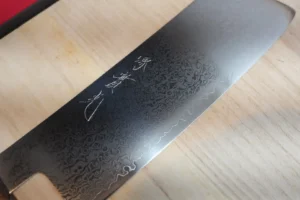
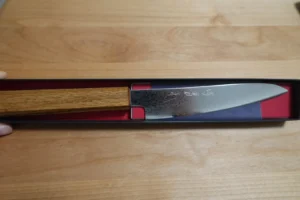
#1 — JIKKO Loco Damascus Petty VG10 (Editor’s Pick)
- Price: $207.00
- Blade Length: 5.3 inches (135mm)
- Steel: VG-10 Damascus Stainless Steel
- Handle: Oak (natural wood)
- Origin: Sakai, Osaka — 120 years of craft heritage
- Why I recommend it: This is the petty knife I use daily. The Damascus VG-10 holds an exceptional edge, and the fine tip gives precise control over detailed prep. The craftsmanship is immediately visible — the kind of knife you buy once and keep for decades.
→ Full review: JIKKO Petty Knife Damascus VG10 Review
#2 — Sakai Takayuki 33-Layer VG10 Damascus Petty 150mm (Best Value Damascus)
- Price: $133.99
- Blade Length: 5.9 inches (150mm)
- Steel: VG-10 core, 33-layer Damascus stainless steel (hammered finish)
- Handle: Mahogany wood
- Hardness: HRC 60±1
- Origin: Sakai, Osaka — 600 years of bladesmithing heritage
- Why I recommend it: If you want Damascus aesthetics without paying over $200, this is the one to get. The VG-10 core delivers the same sharpness and edge retention as higher-priced Damascus knives, while the 33-layer hammered finish reduces food sticking. Sakai Takayuki is a trusted name among professional chefs in Japan — this is real Sakai craft at a fair price.
#3 — Misono UX10 Swedish Stainless Petty 150mm (Best Professional Pick)
- Price: $155.99
- Blade Length: 5.9 inches (150mm)
- Steel: Swedish high-carbon stainless steel
- Hardness: HRC 59–60
- Weight: 80g
- Origin: Seki, Gifu — Japan’s knife capital since the 13th century
- Why I recommend it: The Misono UX10 is the petty knife you see in professional kitchens across Japan. Swedish stainless steel takes and holds an edge exceptionally well, and at just 80g it feels almost weightless in hand — exactly what you want for hours of detailed prep. No Damascus flash here, just pure performance. If you prioritise function over appearance, this is the best petty knife under $200.
Buying Guide
Blade Length: 120mm vs 150mm
120mm is ideal for in-hand work. 150mm handles both in-hand and board work, making it more versatile. The JIKKO Loco at 135mm is a practical middle ground for most home cooks. If buying one petty knife, 135–150mm is the most useful range.
Steel Type
VG-10 stainless (including Damascus variants) is the best all-round choice: excellent sharpness, good edge retention, and more stain-resistant than carbon steel. Carbon steel petty knives offer even greater sharpness but require careful drying and storage to prevent rust.
Budget Guide
| Budget | Recommendation |
|---|---|
| $100–$150 | Sakai Takayuki 33-Layer Damascus Petty — real Sakai craft, VG-10 Damascus at a fair price |
| $150–$200 | Misono UX10 Petty — professional-grade Swedish stainless, featherweight precision |
| $200+ | JIKKO Loco Damascus Petty — handcrafted Sakai heritage, exceptional finish |
Buy from a US Knife Specialist
A petty is the knife you reach for most, so it is worth buying one you actually like holding. Bernal Cutlery in San Francisco carries Japanese petty knives from small workshops — Konosuke, Hitohira, Wakui, Tosa Tadayoshi — starting around $59, with US stock and in-house sharpening.
Frequently Asked Questions
- What is the difference between a petty knife and a paring knife?
-
A petty knife is longer (120–150mm) than a Western paring knife (70–90mm) and can be used both in-hand and on a cutting board. A paring knife is designed almost exclusively for in-hand work. The petty is significantly more versatile and is the preferred choice in Japanese home kitchens.
- Do I need a petty knife if I already have a santoku?
-
Yes, if you regularly do precision prep work. A santoku handles most kitchen tasks well, but its larger blade is awkward for in-hand work, segmenting citrus, or trimming small ingredients precisely. The petty fills this gap perfectly as a second knife.
- Is a 120mm or 150mm petty knife better?
-
For most home cooks, 135–150mm is the most practical range — it handles both in-hand and board work comfortably. The JIKKO Loco Petty at 135mm sits right in between, making it a great all-round choice. The 120mm is better if you primarily do in-hand peeling.
- Can a petty knife replace a chef's knife?
-
No. A petty knife is a precision companion, not a primary knife. Its shorter blade makes it unsuitable for breaking down large vegetables or slicing proteins. Use the petty for detail work; use your main knife — a nakiri or santoku — for everything else.
- How do I sharpen a Japanese petty knife?
-
Use a whetstone at 15 degrees per side — 1,000-grit to sharpen, 6,000-grit to polish. The petty’s small blade makes it one of the easier Japanese knives to sharpen on a stone. A pull-through sharpener works for maintenance, but a whetstone gives the best long-term results.
Verdict
If you already own a good chef’s knife or santoku, the petty knife is the most useful addition you can make to your kitchen. It unlocks a level of precision that larger knives simply cannot deliver, and the difference is felt immediately in daily prep.
For a handcrafted Japanese option with genuine Sakai heritage, the JIKKO Loco Damascus Petty VG10 is my first recommendation. For Damascus aesthetics at a more accessible price, the Sakai Takayuki 33-Layer VG10 Damascus is excellent value. And if pure cutting performance matters most, the Misono UX10 is what the professionals use.
— Takuma, Tsuru Knife
Disclosure: Some links are affiliate links. If you purchase through them, we earn a small commission at no extra cost to you. We only recommend products we have personally tested or thoroughly researched.